




Teaching Your Dog Their New Name
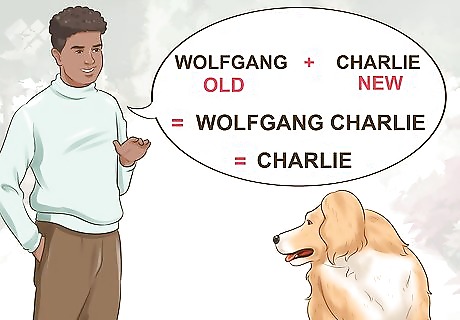
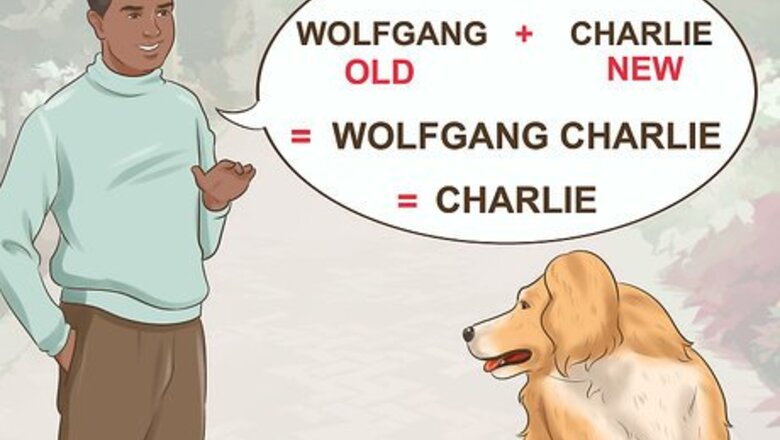
Associate the new name with the old name. For the first week, you may need to call the dog both names. To do this, say the old name and the new name together. If the dog responds to this compound-name, you can start dropping the old name after about a week. For example, if the dog’s old name is “Wolfgang” and their new name is “Charlie,” you should call them “Wolfgang Charlie.” After a week or two, you can just call them “Charlie.”
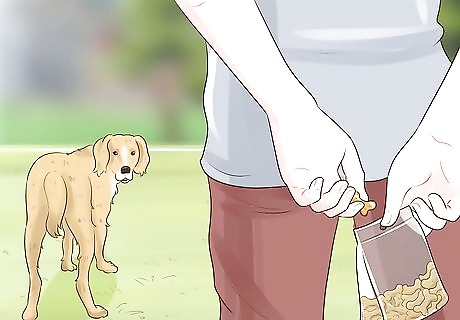
Keep a few treats on you. For the first few days, you should always carry a few treats on you. This will let you test out their name at random moments during the day. Some good treats to carry include: Small dog biscuits Cut-up pieces of cheese Small bits of meat Pieces of kibble
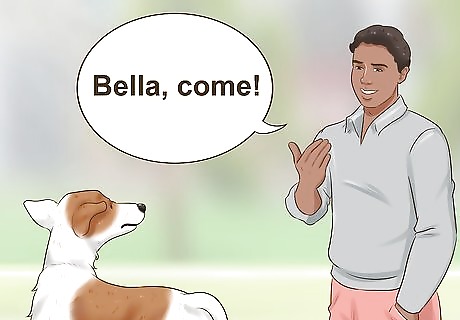
Call their name. Once or twice a day, at a random moment, call out the dog’s new name. Try to encourage the dog to look or come towards you. The best time to do it is when the dog is distracted with another task, such as chewing on a bone or sniffing something. This will teach the dog to respond to their name no matter what they are doing. You can pair the new name with other, already known commands. For example, if your dog responds to the command "come," you can say, "Bella, comeǃ" Your dog will start to associate their name with responding to a command.
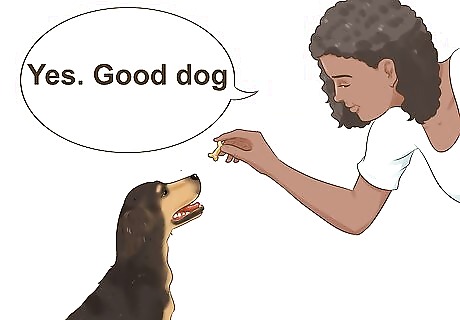
Reward them when they come to you. If a dog understands their name correctly, they should stop what they are doing and come to you. While training the dog to respond to their new name, you should give them a treat whenever they come at the sound of their name. Once they come, say “Yes. Good dog” in a happy tone. Pet the dog, and give them a treat. This will teach them to associate their new name with good feelings, and they will start to respond even when there is not a treat. Do not use the treat to bribe the dog to you. Only show the dog the treat once they have come over and you have praised them.
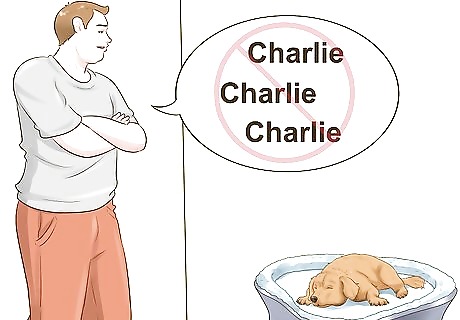
Avoid using the name too often. It is important that the dog appropriately responds to their new name. While you should use the name often enough that they learn the name, you should not use their name all of the time. The dog may start to ignore the name if it is used too often. Good times to use the dog’s new name include: When you are playing a recall game like fetch When you want them to come to you When using obedience commands such "sit," "down," or "come" When you are about to go on a walk
Reinforcing the New Name
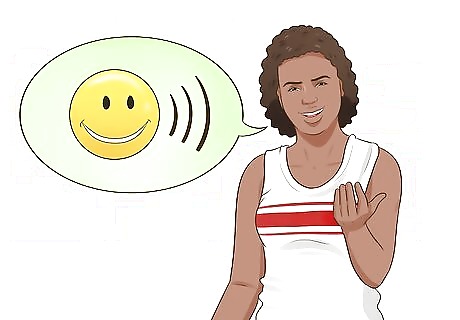
Say the name in a happy tone. When you say the dog’s new name, use a happy, pleasant tone. Act excited, and the dog will naturally respond. The dog will also begin to associate the name with pleasant emotions.
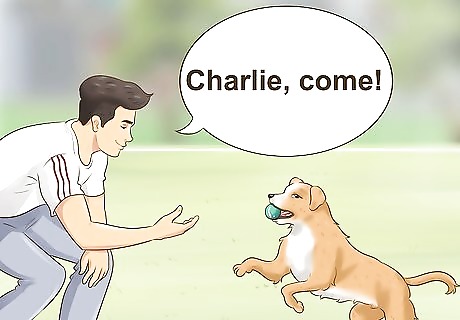
Play games with the new name. As you play with the dog, use the name when the dog returns to you. For example, if you are playing fetch, call the dog's name as they are running back to you with the ball in their mouth. This will teach them to associate their name with returning to you. Do not call their name while they are running to catch the ball or when the ball is in your hand, as this may confuse them.
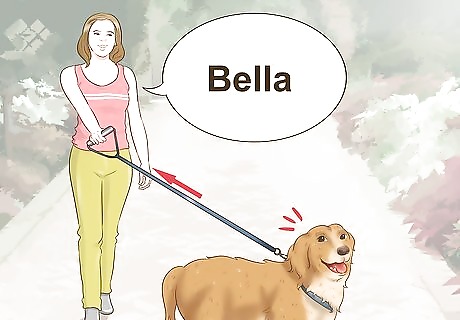
Teach the dog their name on a leash. Most dogs will start responding to their new name within a few days, but if positive reinforcement isn’t working alone, you can try an exercise on the leash. Place the dog on a leash. Wait until they are distracted. Call their name. If the dog looks at you, reward them. If they do not, gently tug the leash while saying the name until they look at you. Say “Yes. Good dog,” and reward them with a treat. Keep doing this until they respond without you tugging at the leash.
Use a clicker to teach the dog its new name. Start by saying the dog's name, then click and give the dog a treat. Do this several times. At some point, when you say the name, the dog will look at you—click at that precise moment and give the dog a treat. This will teach them that the name is a word they should pay attention to. It will also reinforce the concept of clicker training with the dog.
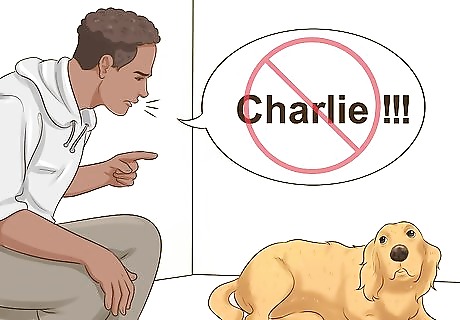
Avoid using the name when punishing the dog. To encourage your dog to respond to the new name, it should be associated with pleasant feelings. Do not use the name when punishing, yelling, or disciplining your dog. Otherwise, the dog may grow scared or anxious when they hear their name. If your dog is getting into trouble, instead of using their name, come up with different correction sounds instead. These can be hissing noises (like “tsst” or "nuh-uh") or a disruptive verbal command (such as “hey” or “no”).
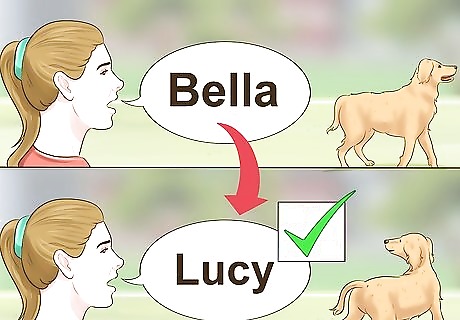
Change the name again if necessary. If after several weeks, the dog is still not responding to the new name, you may need to try again with a different name. Dogs are capable of responding to multiple names, and it will not negatively affect the dog if you change the name again. Try to come up with a different, more distinct name, and begin training again. Do not change your dog's name on a whim. Good reasons to change a dog's name include recent adoption into a new family, a lack of response from the dog towards their old name, or an association between the name and an abusive situation.
Establishing Their New Name
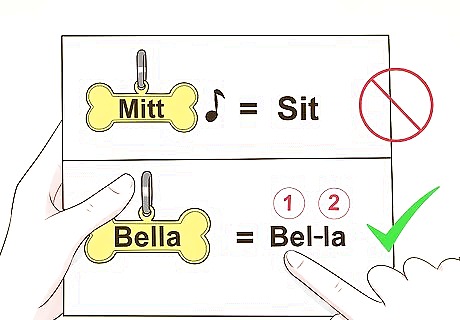
Find a simple name. The transition to a new name will go more smoothly if you choose a simple, easily recognizable name. Make sure that the name is no more than two syllables long. You may not want to choose a name that sounds like a command (for example, if you name a dog “Mitt,” he might confuse the name with “sit.”) Some popular dog names include: Bella Ollie Max Ace Bailey Jack Shiloh Shadow Nova
Choose a new name that has the same first syllable as the old name. It may also be easier for your dog to learn his new name if it has the same first syllable as the old name. For example, if your dog’s name was Lucky, then you may find it easy to change it to Lucy. Or, if the dog’s name was Betsy, then you could change it to Bella.
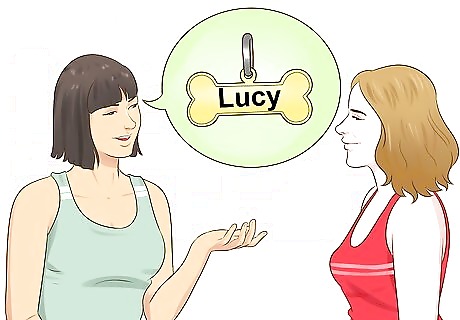
Tell others what the dog's new name is. To help teach your dog their new name, it is important that everybody calls them by this name instead of their old one. Inform your friends, family members, and vet of the new name, so that they do not call the dog by the wrong name.
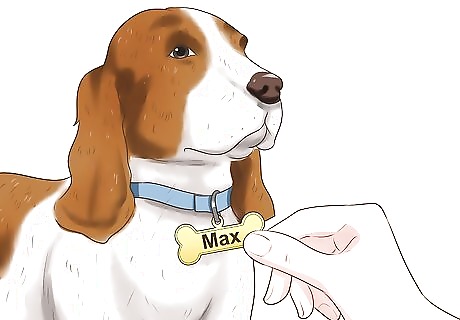
Create a dog-tag with their new name. While your dog cannot read, it is important to put a dogtag on their collar with the new name as soon as possible. This will encourage other people to call them by the new name, thus reinforcing what their name is. Furthermore, if the dog becomes lost, others will be able to call the dog and return them to you.










Comments
0 comment