




Starting with Range of Motion and Strengthening Exercises
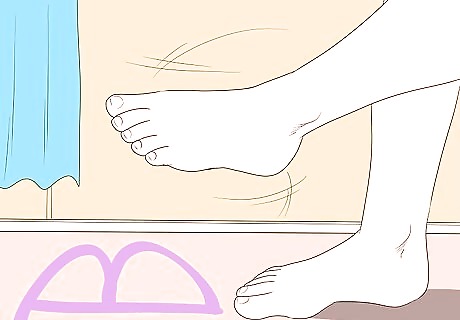
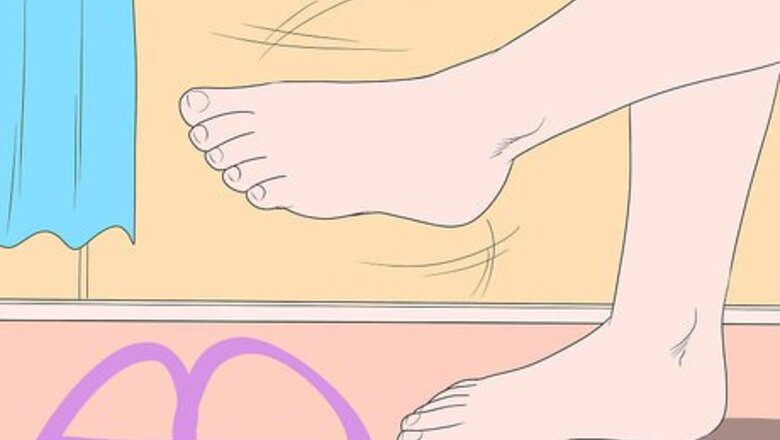
Practice writing the alphabet with your toes to increase mobility. Sit in a chair and raise your injured ankle up so that it is out in front of you. Pretend that your big toe (or even your whole foot) is a pen. Write the alphabet in the air, keeping in mind that your ankle will most likely feel pretty stiff in the beginning—it will get easier with time and practice. Once you have written the alphabet, try to write the alphabet backwards to increase your range of motion. Do this 1 to 3 times, up to 5 times a day. You can do it while working or watching TV.
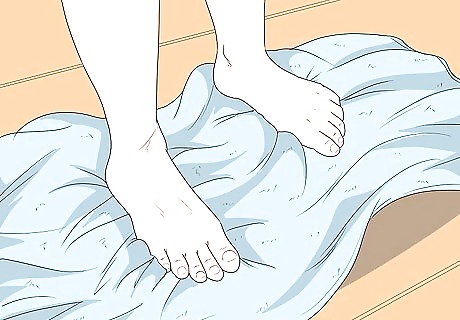
Try towel curls. Towel curls target the muscles in your shin, which can help treat your high sprain. Sit on a chair and place your injured foot on top of a towel. Pull the towel towards you by curling your toes and then use your toes to push the towel away. Do this for 2-3 minutes, up to 5 times a day. When you're up to it, you can move on to more difficult exercises. You can make this more challenging over time by adding a weighted item to the towel, such as a book or canned good.
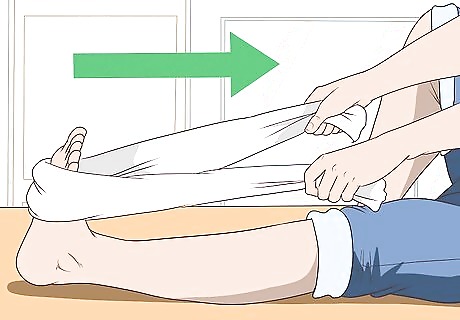
Strengthen your muscles with a towel press. The towel press exercise targets your calves, which can impact your ankle. Sit with your legs stretched out in front of you. Wrap a towel across the center of the sole of your foot and take both ends of the towel in each of your hands. Pull the edges of the towel towards you. Resist the pull by pushing your foot against the towel, away from your body. Hold this position for 15 seconds. After the time is up, rest for 30 seconds and then repeat the exercise 3 more times. Stop doing the exercise if you start to feel pain. If you have a yoga or exercise strap, you can use this instead of a towel. Do these exercises until you feel ready to move on to stretches. This will vary from person to person.
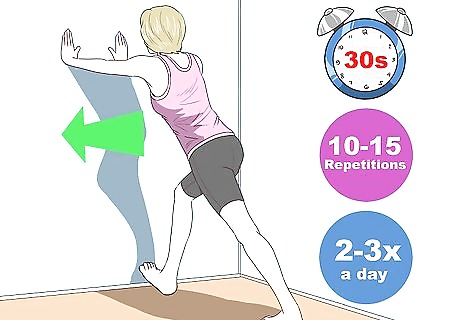
Stretch your calves out. You can do a calf stretch by placing your injured foot behind the uninjured foot. Stand near a wall so that you can use it for support. Lean forward and push against the wall in such a way that you feel the calf muscle of your injured ankle stretching. You should not feel any pain when doing this exercise—if you do, stop. Hold this position for 30 seconds and do two sets of 10 to 15 repetitions, 2-3 times a day. Your doctor or therapist will advise that you do this until you're ready for more challenging exercises. The length of time really depends on the individual.
Trying Strengthening Exercises

Talk to your doctor before starting strengthening exercises. The time you have to wait before you can begin exercises will depend on how serious your sprain was. Pushing yourself to do exercises before you are ready could result in injuring yourself further. Moderate high ankle sprains will generally make you unable to put weight on your ankle for 1 or 2 weeks. When you can start putting weight on it again, talk to your doctor and start doing exercises. If you had surgery to repair a very severe high ankle sprain, you will most likely have to wait longer than 1 or 2 weeks before you begin rehabilitation. Follow the time frame that your doctor gives you.
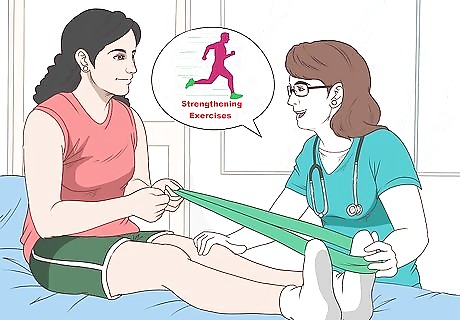
Work with a physical therapist to determine the best exercises. Like talking to your doctor about when to start exercising, talking to a physical therapist about the specific exercises you do is also a good idea. Each injury is different, so your physical therapist might recommend some exercises over others.
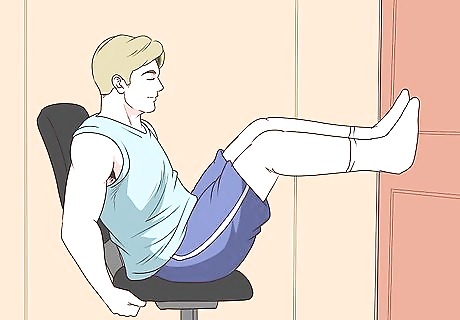
Push against an immovable object to strengthen your ankle. While sitting in a chair, place your foot flat on the floor. Pressing outwards, push your foot against a steady object such as a door or wall. Hold this position for 6 seconds, then relax. Do 8 to 12 repetitions each day for 2-4 weeks, depending on the severity of your injury.
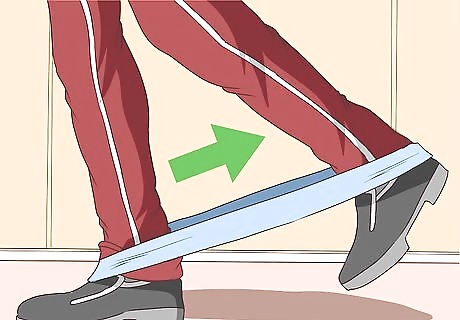
Use a resistance band once you feel strong enough. Use an exercise band to help strengthen the upper part of your ankle. Place your injured foot in the center of the tube, then press your foot outwards. Count to 10 as you bring your foot back towards the center of the tube. Do this exercise 1-2 times a day with 8 to 12 repetitions each time. Your doctor or therapist will let you know when to stop doing these exercises.
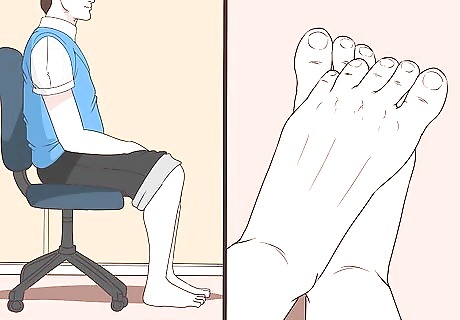
Try using your other foot as resistance. Stay in your seated position, and place your feet flat on the floor, side by side. Press your injured food into your other foot and hold for 6 seconds before relaxing. Next, you can try placing the heel of your strong foot on top of your injured foot. Try to push up with your injured foot, holding for 6 seconds. Try for 8-12 repetitions, 1-2 times per day, until you are healed.
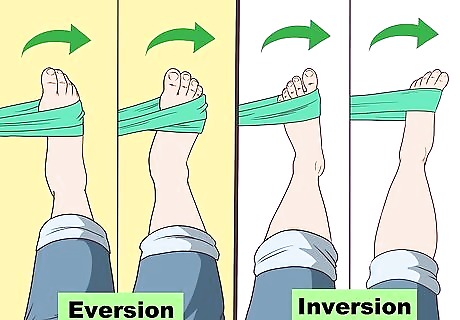
Use an elastic band to do eversion and inversion exercises. Eversion refers to turning or moving your foot outward, while inversion means turning your foot in towards your body. Loop the elastic band on your foot while holding the other end. When doing the eversion, turn your foot away from your body. When doing the inversion, turn your foot towards the center of your body. Do 8-12 repetitions. Talk to your doctor about how long you need to continue these exercises.
Practicing Balance and Control Exercises
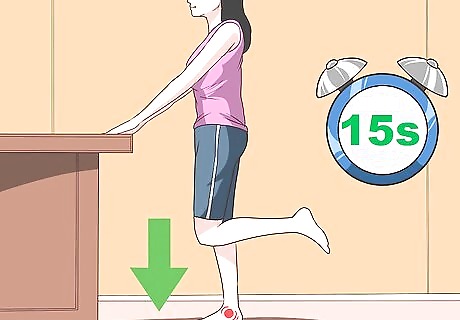
Try a single leg stand to increase your stability. The single leg stand is done by standing with one arm placed on a table or any support you can find. Carefully shift the weight of your body to the injured foot and then hold it there for 15 seconds if you can. If you can’t, just stand on your injured ankle for as long as you can—it will get easier with time and practice. As you progress, try to stand on your injured foot for 60 seconds. Do 2 sets of this exercise with 10 to 15 repetitions, 2 or 3 times a day. You'll continue for as long as your doctor or therapist advises. To make the leg stand as hard as possible, close your eyes while standing on a cushion.
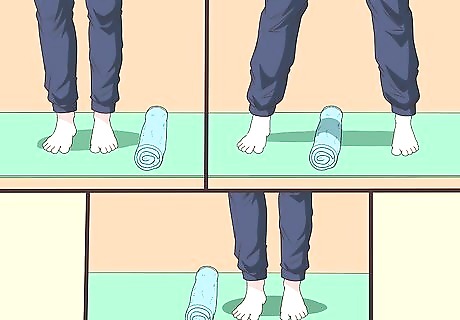
Practice lateral steps. The lateral step is done by placing a rolled towel on the floor. Stand on the right side of the rolled towel and lift your left leg over the towel. Place it down on the opposite side of the towel. Bring your right leg and the rest of your body to the right side of the rolled towel. Return to the other side of the towel by doing the same steps with the left side of your body. Increase your speed if you can do this without feeling pain. Do 2 sets of 10 to 15 repetitions, 2 or 3 times a day.
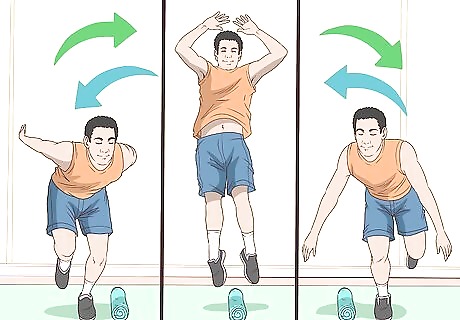
Do lateral hops after you have mastered the lateral step. The lateral hop is done by placing a rolled towel on the floor. Stand at the right side of the rolled towel, then hop over it, landing on your left foot. Hop again on the opposite side, this time landing on your right foot. Do 2 sets of 10-15 reps, 2-3 times per day.Treat a High Ankle Sprain with Exercises Step 16.jpg









Comments
0 comment